Showing posts with label Red Mountain Music. Show all posts

Tuesday, August 9, 2011

Linktastic!

Normally I don't often dedicate a post to links, but it's been over a month since my last post and it's time for me to play a bit of catch-up. So today's post is plumb full of links directing you, dear reader, to some things I've really been enjoying recently and wanted to share with you.

Doctrine and Doxology: Why we must fire boring teachers and preachers - Carl Trueman is always saying something awesome. He's always seeing and saying things from a different perspective that washes over a subject like a fresh breeze. This article from Reformation 21 is fantastic. The reason I call my blog Sound Doxology is exactly what he explains in this article; namely that doctrine and doxology are linked, and you can't have one without the other. But as great as this article is, I recommend everything Carl Trueman writes.

Seeds Family Worship - These guys do an incredible job at putting Scripture to music. A couple years ago I wrote about how most songs written for children in the church are either putrid or just stupid and we are in major need of children's songs that have good quality in both music and content. Well the Seeds guys are doing it extremely well.

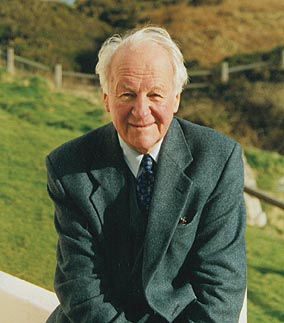
John Stott Has Died - I was saddened to hear this news. God used John Stott to greatly increase my understanding of worship. Stott was really the first person I read who clearly conveyed that the more we know God the more we will worship God. I've had this quote of his on my blog since I started it a few years back:
"All true worship is a response to the self-revelation of God in Christ and Scripture, and arises from our reflection on who He is and what He has done….The worship of God is evoked, informed, and inspired by the vision of God….The true knowledge of God will always lead us to worship."

Worship Leaders – Prepare Like a Preacher - Good things are always happening at Cardiphonia. I found this article to be wonderful, and as always there are fantastic resources that go along with it.

Speaking of Cardiphonia, as I was linking to the site I ran across the latest post The Rise of Digital Hymnals. (See, I told you good things are always happening there...) I am a huge, mega fan of Digital Hymnals. I've been telling you about Indelible Grace and Red Mountain Music for a while now, but Bruce has collected and linked to a few more!

Reflections on the Psalms - I'm half-way through this book by CS Lewis and I already want to recommend it. Reading this book has caused me to fall more in love with the book of Psalms. After a chapter or two I can't help but close the book and start reading the Psalms.

The Wingfeather Saga - Andrew Peterson, in my opinion, is a master wordsmith. His lyrics in his songs pierce my heart in ways no other songwriter has done before. So it's no surprise that his books do the same thing. He's written three books so far, with a fourth on the way. I just finished the third book and the story rejuvenated my soul. This really doesn't have much to do with congregational worship, but after reading his last book, I was driven to worship in light of the beauty and truth of God.

Gospel Focused Leadership with Dr. Richard Blackaby - This one-day event will be taking place at Wornall Road Baptist Church (my church) on Saturday Aug 20 from 10AM to 3PM. Includes worship and prayer as well as leadership from Dr. Blackaby on "getting our hearts, minds and God's people onto God's Agenda." The cost is free and lunch is provided. If you live in (or are nearby) the Kansas City area this would be a great opportunity for you and/or your church leaders to rest and reorient around the gospel.

Around the Table - This is my new blog that both my wife and I contribute to. (It's also likely the reason why I haven't posted here lately...) Essentially it is a blog about food and fellowship and life around the dinner table. We share recipes and stories and hopefully it will inspire you or make you laugh.

Finally, I thought I'd link to what's become my most viewed post (by far): The Effeminate Worship Leader. I knew this would strike a nerve when I first posted it (both positive and negative) but I didn't really expect the amount of traffic it has generated, and what it continues to generate. I've thought about re-posting it and updating it a bit, but after re-reading it I don't know if I have much else to say about it in this format. I am always open to having a dialogue about these kinds of things though.

So that's it for now! Hopefully some of these links have interested you as much as they have interested me.

Thursday, May 26, 2011

How We Will Worship in the Wake of Tragedy


Dear Church Family,

As we consider the tragic events that have taken place this last week with tornados eastern Kansas, recently in Sedalia and most noticeably of all in Joplin, Missouri, no doubt many of you are asking “Why?”. For that answer I would direct you to this link from our church’s website: Why?

The question I’d like to deal with isn’t asking “Why?” it is asking “How?” Specifically, how are we to respond in worship in light of calamity, tragedy, death and destruction? This Sunday as we gather together for worship what will our corporate response to God in light of these tragedies look like?

I want to share with you a portion of our service for this upcoming Sunday in hope that we might begin, even now, to prepare our hearts so that when we come together our understanding of what we are doing in worship will be better grasped, and through that understanding we might be even more united so that we might make the praises of God truly glorious! (Psalm 66:2)

After our time of Fellowship we will hear Job 1:13-22 read aloud:

Now there was a day when his sons and daughters were eating and drinking wine in their oldest brother’s house, and there came a messenger to Job and said, "The oxen were plowing and the donkeys feeding beside them, and the Sabeans fell upon them and took them and struck down the servants with the edge of the sword, and I alone have escaped to tell you." While he was yet speaking, there came another and said, "The fire of God fell from heaven and burned up the sheep and the servants and consumed them, and I alone have escaped to tell you." While he was yet speaking, there came another and said, "The Chaldeans formed three groups and made a raid on the camels and took them and struck down the servants with the edge of the sword, and I alone have escaped to tell you." While he was yet speaking, there came another and said, "Your sons and daughters were eating and drinking wine in their oldest brother’s house, and behold, a great wind came across the wilderness and struck the four corners of the house, and it fell upon the young people, and they are dead, and I alone have escaped to tell you."
Then Job arose and tore his robe and shaved his head and fell on the ground and worshiped. And he said, "Naked I came from my mother’s womb, and naked shall I return. The LORD gave, and the LORD has taken away; blessed be the name of the LORD." In all this Job did not sin or charge God with wrong.
A horrible tragedy (tragedy upon tragedy!) befell Job. In an instant, all that he had was gone. His most prized possessions—his very children—were killed in a tornado. What was Job’s response? “The Lord gave, and the Lord has taken away; blessed be the name of the Lord.” Job didn’t sin in anger, nor did he charge God with wrong. He worshiped God. He recognized who God is and who Job is. God is sovereign, Job is not.

So we, like Job, will sing of God’s sovereignty and goodness in both good times and bad. We will do so together singing Matt and Beth Redman’s song “Blessed Be Your Name”. May our hearts burst with true humility as we cry out to God:

You give and take away
My heart will choose to say
Lord, blessed be Your name

The next song we will sing is “All Things New” by Horatius Bonar and Red Mountain Music. This song gives us hope that God will not linger forever, and not only that, He will one day renew all things. So while it is right that we exalt God by confessing “You give and take away” we must also look for the day when He will make all things new. One day there will be no more suffering, no more towns devastated by tornadoes. Through the words of this song we corporately confess our hope and trust in the promises of God.

We will then hear Luke 13:1-5 read aloud:

There were some present at that very time who told him about the Galileans whose blood Pilate had mingled with their sacrifices. And he answered them, "Do you think that these Galileans were worse sinners than all the other Galileans, because they suffered in this way? No, I tell you; but unless you repent, you will all likewise perish. Or those eighteen on whom the tower in Siloam fell and killed them: do you think that they were worse offenders than all the others who lived in Jerusalem? No, I tell you; but unless you repent, you will all likewise perish."
 (For a deeper look into this passage I highly recommend this sermon from John Piper)

May we be fully aware of the depth of our sin and the infinite shortness of our shortcomings. May we recognize that our crimes have been committed against an Infinite, Holy, and Righteous God. May we recognize the infinite punishment that ought to be justly applied to us. May we, even now, turn from our sins and look to the cross of Christ and cry “Be merciful to me!” And together we will turn to the cross and say those very words, praying as we sing Randall Goodgame's song “Be Merciful to Me”.

But we don’t cry out without hope. God truly is merciful and shows us Christ dying in our place, which causes us to rejoice even in the midst of our pain and suffering. And we will be reminded of this as we hear God’s Word in Philippians 4:4-7:

Rejoice in the Lord always; again I will say, Rejoice. Let your reasonableness be known to everyone. The Lord is at hand; do not be anxious about anything, but in everything by prayer and supplication with thanksgiving let your requests be made known to God. And the peace of God, which surpasses all understanding, will guard your hearts and your minds in Christ Jesus.
Only through Christ do we have this peace; a peace that allows us to rejoice in God even when our hearts are breaking, a peace that allows us to rejoice even in the midst of suffering. And so we will confess that no matter what comes—when God gives or when He takes away—through Christ we can and will sing “It is Well with My Soul”.

I pray that this foretaste of our gathered worship for this upcoming Sunday has whetted your appetite. I pray that you come expectantly, longing to hear from God, longing to rejoice alongside fellow believers, longing to magnify Christ in all things. I love you and I look forward to making much of God together with you this Sunday.

Your brother,
Rich Tuttle

Monday, October 18, 2010

Giving New Life to Old Hymns: Part I

I am so grateful for the abundance of hymnody that has been passed down to us throughout the ages. I am also grateful for the resurgence of these hymns through groups and ministries like Indelible Grace and Red Mountain Music. I really feel that one of the reasons this resurgence has some real oomph behind it is that reviving hymns accomplishes two important things at once: On one hand it establishes a real connection with our Christian forefathers and on the other it is immensely authentic.

The connection to the past is obvious, but I say that this reviving of hymns is authentic because it gives our congregation a real voice. We are able to say the same thing that Isaac Watts said but in our own context. The ability to take the texts of these old hymns and give them new life in the midst of our congregations is an amazing gift to the modern church. And again, while I am grateful that there are groups and churches out there doing this, I want to encourage the local church worship leader to begin doing this as well. As talented as Matthew Smith is, he ultimately doesn’t know your congregation like you do. You have your finger on the pulse of your congregation; you know their needs and what they need.

Beyond Re-Tuning
Much of the focus of this resurgence of hymns has been writing brand new tunes to old hymn texts. Though it is hardly a new concept, I’ve heard this idea cleverly called a Re-tune. This is the most obvious way hymns are being used in this resurgence, however the idea of giving life to old hymns doesn’t always have to end with a new tune. For local worship leaders the goal shouldn’t be writing a new tune, the goal should be serving your congregation with this ancient treasury of hymns. There are a variety of ways we can use hymns to serve our congregation aside from writing a brand new tune. I want to offer a few other suggestions beyond Re-tuning that will allow you to tailor hymns to serve your people.

Tailoring and Tweaking our Treasured Hymns
Inspired by the phrase Re-tune I have categorized a few ways we can tweak, tinker with, and tailor this massive treasure of hymnody we have at our disposal. Aside from a complete Re-tune I have come up with four ways in which we can do this: Rearrange, Rewrite, Replace, and Redeem. Some will overlap, but I believe we can utilize each one for the glory of God and the edification of our churches. We’ll look at two of these today and two in a later post.

Rearrange
One very easy way to give a hymn new life is by rearranging it. I find that this has worked best for me with some of the old familiar gospel songs that often have a refrain after each verse. A simple way to rearrange this type of song is to not sing the refrain after every verse. For example, for the song “The Solid Rock” you might begin with the refrain:

On Christ the solid rock I stand
All other ground is sinking sand

Then sing Verse 1 followed by Verse 2. Only after Verse 2 would you sing the refrain once more. This is only a slight change but it will be breath of fresh air to a congregation who has sung it the same way for most of their life. Compare the arrangements side by side:

Normal      Rearranged
Verse 1       Refrain
Refrain        Verse 1
Verse 2       Verse 2
Refrain        Refrain
Verse 3       Verse 3
Refrain        Verse 4
Verse 4       Refrain
Refrain

The trick however in rearranging is to not mess up the logic of the original text, so you likely wouldn’t sing “Come Thou Fount of Every Blessing” in reverse or in a mixed order. But you can still rearrange a hymn by repeating a verse or portion of a verse at the end of a song. Use it as a tag to reinforce the theme of the hymn or to expose a particular truth that you want to drive home. In this case, at the end of “Come Thou Fount” you might repeat the middle of the last verse:

Prone to wander, Lord I feel it
Prone to leave the God I love
Here’s my heart, oh take and seal it
Seal it from Thy courts above

Rewrite
Rewriting is the opposite of Re-tuning. This is taking a familiar tune and writing brand new words to it. Perhaps a tragedy has taken place in the church and you cannot find the words to say in any particularly familiar hymn, nor does the congregation have the time to learn a new song during their heartbreak. Penning new lyrics to an old tune can be a powerful tool to serve your congregation well. If you are able to give your congregation new words to sing in a familiar way that meets them where they are, there is likely no better way a worship leader can serve people in a time of grief. This can be done for many different seasons in the life of a local church.

Rewriting can also be used to reinforce a certain theme or a particular truth that the pastor might be preaching on. This is a good way for you and your pastor to team up for the cause of the gospel. Again, familiarity with the context of your local congregation is key.

Rewriting can also be a good starting place for you and for those interested from your congregation to begin re-tuning your own hymns. Instead of worrying about an original tune, begin with a familiar tune. This instantly gives you a way to see if the words you write are singable and at the same time automatically provides a particular mood for your song. Perhaps you will be content to simply sing your new song with the old tune, but don’t be afraid to branch out every now and then and try a new tune. This is a great first step in hymn writing.

Below is an example of a Rewrite I did earlier this year with “Pass Me Not O Gentle Savior”. I must admit it is only a partial rewrite because I only rewrote the refrain based on the verses. The reason for this rewrite is because I felt like this song had become a one trick pony. The only time we broke it out was after the sermon, and then we only sang the first verse and refrain. I had always felt that the remaining three verses were more powerful than the first, but the refrain always pulled us away from the truths explored in those verses. So I ditched the first verse and rewrote the refrain section based on its preceding verse. Instead of a constant refrain pleading to Jesus “Do not pass me by” there is now a logical progression that runs through the song from unbelief and sorrow, to salvation and grace, to eternal joy through Jesus. The tune remained the same, but now the song has been set free and we’re able to use this song in a more meaningful and purposeful way in our service. The verses are original and the italicized refrains are my additional rewrites.

Let Me at Thy Throne of Mercy
(to the tune of “Pass Me Not O Gentle Savior”)

Let me at thy throne of mercy
Find a sweet relief
Kneeling there in deep contrition;
Help my unbelief
Jesus, Jesus help my unbelief!
Glorify the Father through my
sorrow, loss and grief

Trusting only in thy merit
Would I seek thy face
Heal my wounded, broken spirit
Save me by thy grace
Jesus, Jesus, save me by thy grace!
Through the cross have mercy on all
sinners in this place

Thou the spring of all my comfort
More than life to me
Whom have I on earth beside Thee?
Whom in heav’n but thee?
Jesus, Jesus; More than life to me!
Endless pleasure! Joy abounding!
All are found in Thee

In my next post I’ll discuss two more ways in which we can use the treasury of hymns to serve our congregation. In the meantime I hope that this post has encouraged you to begin not only selecting hymns, but utilizing them in skillful ways to serve your church.

Wednesday, April 21, 2010

Worship Leaders: Imitate William Gadsby and Charles Spurgeon

"Remember your leaders, those who spoke to you the word of God. Consider the outcome of their way of life, and imitate their faith." -Hebrews 13:7

In the time span of over 50 years two hymnbooks were published in the 19th century. William Gadsby published his hymnbook, now known as Gadsby’s Hymns, in 1814 (and later in 1838) and Charles Spurgeon published his hymnbook, known as Our Own Hymn-book, in 1866. Both men compiled these hymnbooks in a very comparable fashion and I think it is worth our time to find out why and imitate their example.

While both men have many admirable qualities that would be beneficial for Christians to study and emulate, I want to focus on the strikingly similar pastoral concern that both men had for their congregations concerning the worship of God through singing. From reading the preface of each hymnbook we discover the reasons why Gadsby and Spurgeon made the effort to compile their hymnbooks in the first place. I want to take a look at what reasons both of these men gave in their own words and see how we might benefit as worship leaders by imitating these two great men of faith.

Gadsby’s Reasons

When Gadsby became the pastor of his church they had already been established in singing hymns from Watts, Hart, and from Rippon’s Selection. He writes, “Though some of these hymns are big with the important truths of God, there are others…which give as legal a sound as if they had been forged at a certain foundry. This was one reason which induced me to publish a selection. Another was, we had three editions of Hart’s Hymns amongst us, either differently arranged or differently paged; so that when any of those hymns were given out, one part of the congregation was unable to find them. These circumstances, together with a desire in my own breast and the express wish of others to have a selection of hymns in one book free from Arminianism, and sound in the faith, that the church might be edified and God glorified, were what induced me to attempt this work.”
(For Gadsby's Preface click here)


Spurgeon’s Reasons

Spurgeon wrote a bit more about why he felt it necessary to compile a hymnbook but we can gather his primary motives through the following excerpts:

“Our congregation has long used two hymn-books [Watts and Rippon]…and we should most probably have been very well content with those books had it not been for difficulties connected with the remarkably complex arrangement of their content. To strangers it was no small task to discover the hymn selected for singing; for, in the first place, there were two books, which was in itself an evil; but the matter was made far worse by the fact that these two volumes were each a puzzle to the uninstructed…We felt that such ought not to be the state of our service of song.”

“None of the collections already published are exactly what our congregation needs, or we would have cheerfully adopted one of them…Our congregation has distinctive features which are not suited to every compilation, not indeed by any known to us.”

“Subjects frequently passed over or pushed into a corner are here made conspicuously the themes of song; such, for instance, as the great doctrines of sovereign grace, the personal Advent of our Lord, and especially the sweetness of present communion with Him.”
(For Spurgeon’s Preface click here)

Concern for Order, Unity and Intelligibility

Both men laud the efforts of the likes of Dr. Watts’ and Dr. Rippon’s collections but they understood that the way in which their congregations used these wonderful resources hindered worship greatly. The collections were contained in multiple volumes and editions which lead to endless page-flipping and book switching after every song. Various editions of the same hymnbook would produce confusion as to which hymn number the congregation was going to be singing and certain verses might be laid out in a different order or omitted altogether.

The lack of a uniform means of presenting songs no doubt led to an improperly ordered service. The lack of participation due to these reasons led to disunity. Both of which led to unintelligibility of praises. Spurgeon writes, “The providence of God brings very many new hearers within the walls of our place of worship, and many a time we have marked their futile researches, and pitied the looks of despair with which they have given up all hope of finding the hymns, and so of joining intelligently in our words of praise.”

These men saw a problem and out of their concern for congregational order, unity and intelligibility they produced a hymnbook which accomplished all three. Not only did this solution edify the church, but it also broke down unnecessary barriers to unbelievers who might visit.

Concern for Sound Doctrine

It is apparent that both men had a deep concern for their congregations to have a steady diet of sound doctrine in their hymns. Gadsby introduces his hymnbook with Psalm 47:7 “sing ye praises with understanding.” Both men were aware of the educational impact of hymns and sought to squelch shoddy theology and emphasize that which is good. Spurgeon made it a priority to not only include doctrinal songs but to highlight them and push them to the forefront of congregational singing. Gadsby, a true Strict Baptist of his time and a man of stronger backbone than most today, found it necessary to not only emphasize sound doctrine, but to make sure his collection was devoid of Arminian theology. Here both men are truly acting like Shepherds for their congregation; guarding, tending and feeding all at the same time.

Concern for Their Flock
Ultimately these men cared greatly and deeply for their congregations. They wanted to see the praises of God sung orderly, with unity and intelligibility, through sound doctrine “that the church might be edified and God glorified.” And while I am sure that these men loved the Church universal, it is abundantly apparent that they loved their local congregations very, very deeply. The hymnbooks that they produced for their churches are landmarks of this love. That Spurgeon’s compilation became known as Our Own Hymn-book is evidence enough that the local church was the primary focus of the project.

Gadsby and Spurgeon knew their congregations intimately enough to recognize that they couldn’t just copy or mimic another congregation. They needed to produce something specifically for their people. Spurgeon recognized that his congregation’s “distinctive features [were] not suited to every compilation.” Gadsby gave ear to the “express wish of others” concerning content for the hymnal.

Another indication of the love and concern these men had for their flock is the fact that they composed hymns for them. Gadsby composed and included over 150 hymns in his compilation. Spurgeon composed several himself and tells us why. “The editor [Spurgeon] has inserted with great diffidence a very few of his own composition, chiefly among the Psalms, and his only apology for so doing is the fact that of certain difficult Psalms he could find no version at all fitted for singing, and was therefore driven to turn them into verse himself.” Spurgeon knew what his congregation needed and he supplied it, however hesitantly, out of love.

An additional point we should consider is the way in which both men seem to be plainly aware of Christian Pop-culture’s influence on their congregational music. In deciding how to shape his hymnbook Charles Spurgeon writes,
“We have not cast about for models suggesting by the transient fancy of the hour, but we have followed the indications given us in the word of God and the long established usage of the universal church; desiring to be obedient to the sacred precept, “Let the word of Christ dwell in you richly in all wisdom: teaching and admonishing one another in psalms and hymns and spiritual songs, singing with grace in your hearts to the Lord.”
And Gadsby takes aim at Watts and Rippon’s work, saying that some of their hymns “give as legal a sound as if they had been forged at a certain foundry.” The imagery he offers is that these popular songs, which are gospel-less, are being pumped out of the same mold (sound familiar?). Neither Spurgeon nor Gadsby attempted to copy Christian pop-culture but instead “followed the indications given us in the word of God.” And this was done out of a love for their church.

What This Means for Us

There is much we can learn from William Gadsby and Charles Spurgeon and their compilation of hymns for their congregations. Though we could spend hours discussing ways in which we could imitate these men (and I hope this does spur more discussion!), I want to look at three concerns they had that we would be wise to imitate in our ministries.
1) Imitate their concern for order, unity and intelligibility in worship. What is it that hinders any of these aspects as it relates to your congregational worship service? What are you going to do to remove those hindrances? Is it a visual issue? A sound system issue? A leadership issue? Whatever the case, I encourage you to read through 1 Corinthians 14 and prayerfully consider those things that hinder orderly, united, intelligible worship.

2) Imitate their concern for sound doctrine. Don’t just throw in a song every now and then because it has a lot of doctrine. I encourage you to make doctrinal songs a priority in your congregational singing! Emphasize theology! The more you know about God the more you will love God! Spurgeon puts it this way, “Oh, if you knew Him better, you would fly to Him!” Ask God which aspects of the worship service have overlooked or shoved specific doctrine into the corner.

3) Imitate their concern for the local church. The motive of all of this reforming was a deep love for the church. Both men wanted their hymnals to be of service to their local churches specifically. Any blessings that the hymnbooks might have outside of their local congregations were simply afterthoughts. Do you love your church enough to attend to their needs, guided by Scripture or are you trying to shoe-horn in the latest popular worship fad? Are you depending solely on a Worship Industry to direct your worship planning or do you have one ear to Scripture and the other to the congregation? Pray that God would increase your love for your local church. Ask God to reveal to you the “distinctive features” of your congregation and then seek to find the best and most biblical way to serve them.

I mentioned before, these men like Shepherds did their best to guard, tend and feed their flocks. The hymnbooks they produced sought to accomplish just that. This is the duty of all those who lead and minister the congregation. As a worship leader you have the privilege and responsibility to care for your people when selecting and leading songs and when you plan (in whatever capacity) the worship service. Take time to meditate on passages such as John 21:15-19, and the books 1 & 2 Timothy and Titus. Imitate great men of faith like William Gadsby and Charles Spurgeon and shepherd the flock with similar concern.

Learn More:
Purchase a copy of Gadsby's Hymns and Our Own Hymn-book from Grace and Truth Books
More info as well as some sermons and letters from William Gadsby
Tons of great info and more about Spurgeon can be found at The Spurgeon Archive
Also, I highly recommend checking out Red Mountain Music. They have done an excellent job of re-tuning a few of Gadsby's Hymns.

Tuesday, December 15, 2009

Free Christmas Songs

Over at Justin Taylor's blog Between Two Worlds he's been given permission from 3 great ministries to upload some of their Christmas music for free! All of these organizations are biblically solid and provide extremely wonderful resources to the Church. I encourage you to download these songs and check out their websites.


UPDATE (12-18-09): Justin Taylor added two more free songs: